Remote Site Security: The Features That Matter Most in Remote, High-Risk Environments
On a remote mine site, the nearest neighbour can be kilometres away. Plant worth millions sits idle overnight, and the closest response is a long drive down an unsealed road.
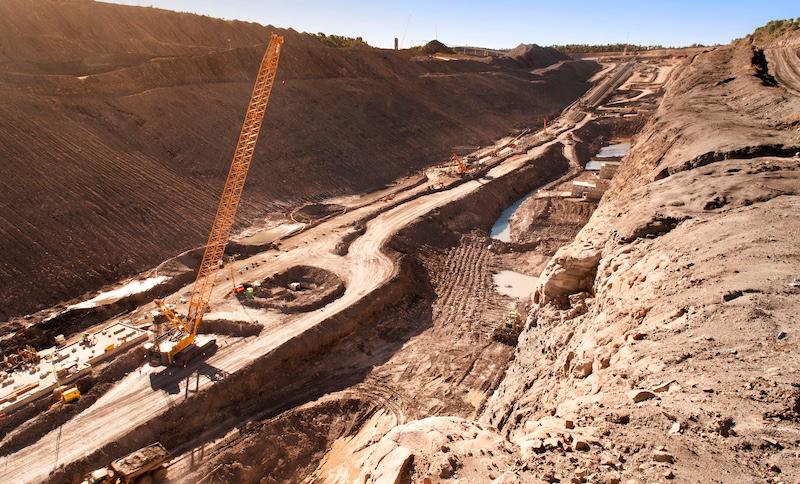
Security out there is a different job. Mining, civil and infrastructure sites cover large areas, deal with heat, dust and storms, often have patchy power and coverage, and can be empty for hours at a time.
A camera that records an incident after the fact isn't enough. A remote security system has to spot a threat early, deter it, and get the right people moving, even when nobody is on site.
So what should you look for? After more than 15 years deploying cameras on mine sites and remote projects across Australia, here's what we've found matters most.
Why Remote Sites Need a Different Approach
A setup that works for a warehouse in Brisbane or Perth won't necessarily survive a mine site in the Pilbara or the Bowen Basin. The risks are different:
- High-value assets: Heavy machinery, light vehicles, fuel, copper cable and tools make remote sites attractive targets.
- Large, exposed areas: Long perimeters, multiple access roads and scattered laydown areas give intruders more ways in.
- Few people on site: After hours, during shutdowns and between shifts, activity can go unnoticed.
- Harsh conditions: Extreme heat, dust, heavy rain and unreliable power can knock out equipment that isn't built for it.
- Slow response: Distance and limited access make it harder to investigate or respond to an incident.
The cost isn't only the stolen gear. One incident can stop work, push out the schedule and bring repairs, investigations and downtime with it.
More cameras won't fix that on their own. What helps is a connected system designed around how your site actually runs.
1. Camera Detail: Seeing Enough to Act On
Picture reviewing footage after an overnight break-in, only to find the ute is too blurry to identify and the person is a moving shape. You captured the incident, but not the detail you needed.
On a mine site, cameras often cover long distances and wide areas, so image quality matters more than usual. 4K cameras capture far more detail than standard HD, which helps teams:
- Identify people and vehicles more clearly
- Review incidents with confidence
- Provide usable evidence for investigations and insurance claims
- Keep detail when zooming into recorded footage
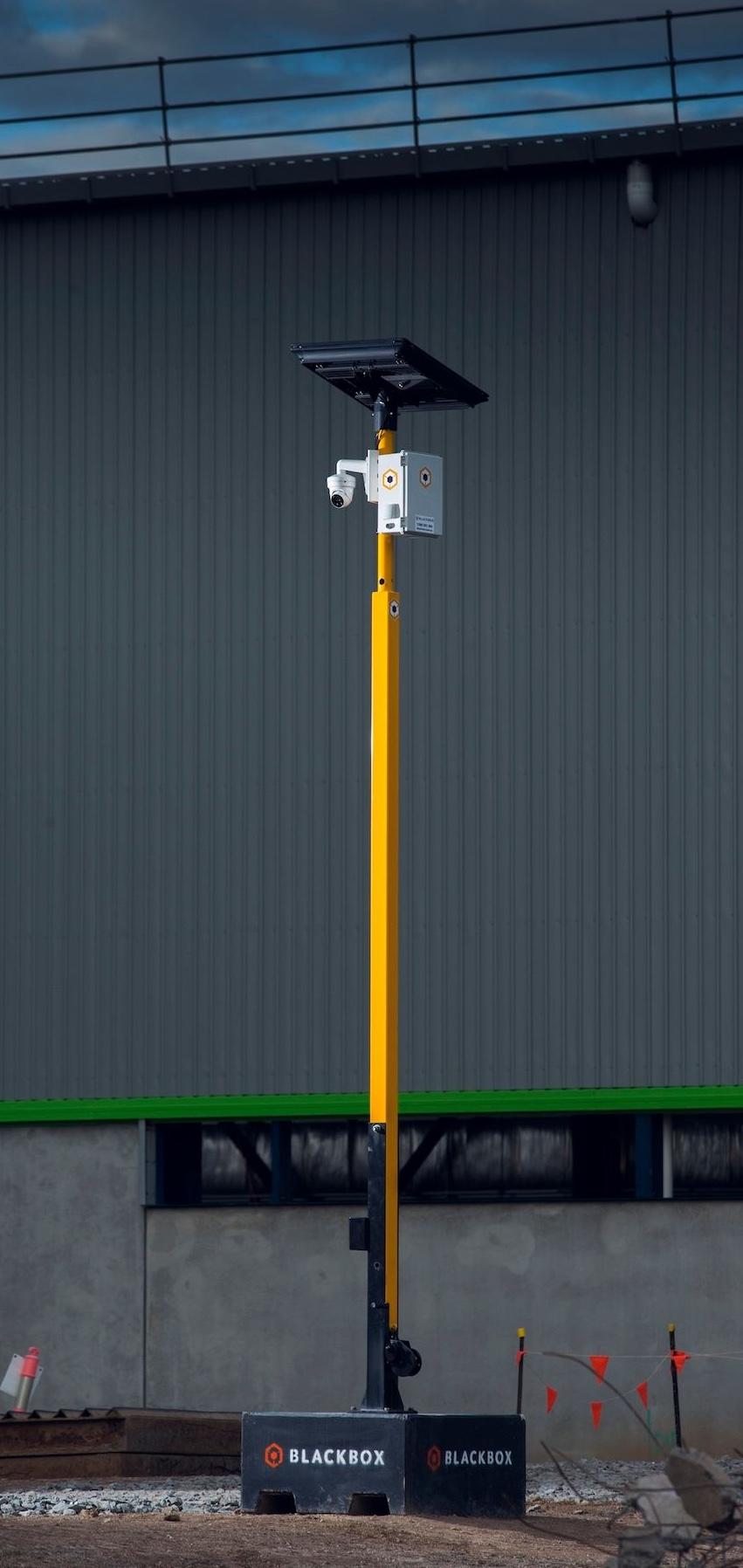
Blackbox's fixed security systems use 4K AI cameras, in single-camera units for targeted areas like gates, fuel storage and site sheds, and dual-camera units for fence lines and larger laydown yards.
For large or changing sites, the Blackbox Overwatch PTZ camera adds reach. It pairs 2K resolution with 25× optical zoom, full remote pan, tilt and zoom control, and AI tracking that follows people and vehicles in real time. Your team can inspect a distant pit edge or haul road without driving out to it.
Resolution is only part of it. Placement, lighting, lens choice and coverage decide whether footage is useful. Our article on why 4K cameras are critical for construction site security covers this in more detail.
2. AI Detection: Fewer False Alarms, Faster Action
Most movement on a remote site isn't a threat. Kangaroos cross boundaries, wind moves scrub, and authorised vehicles pass through gates at all hours.
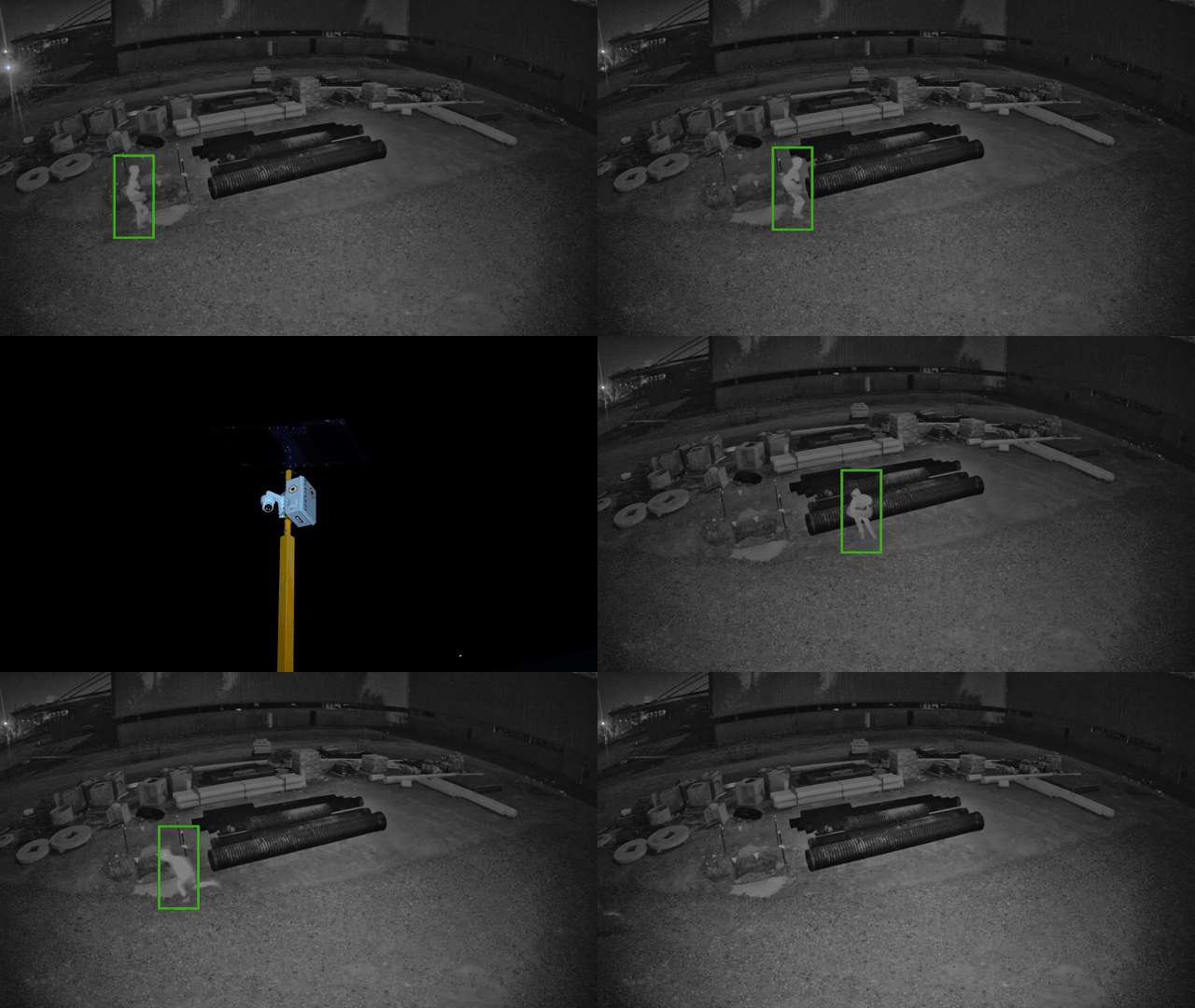
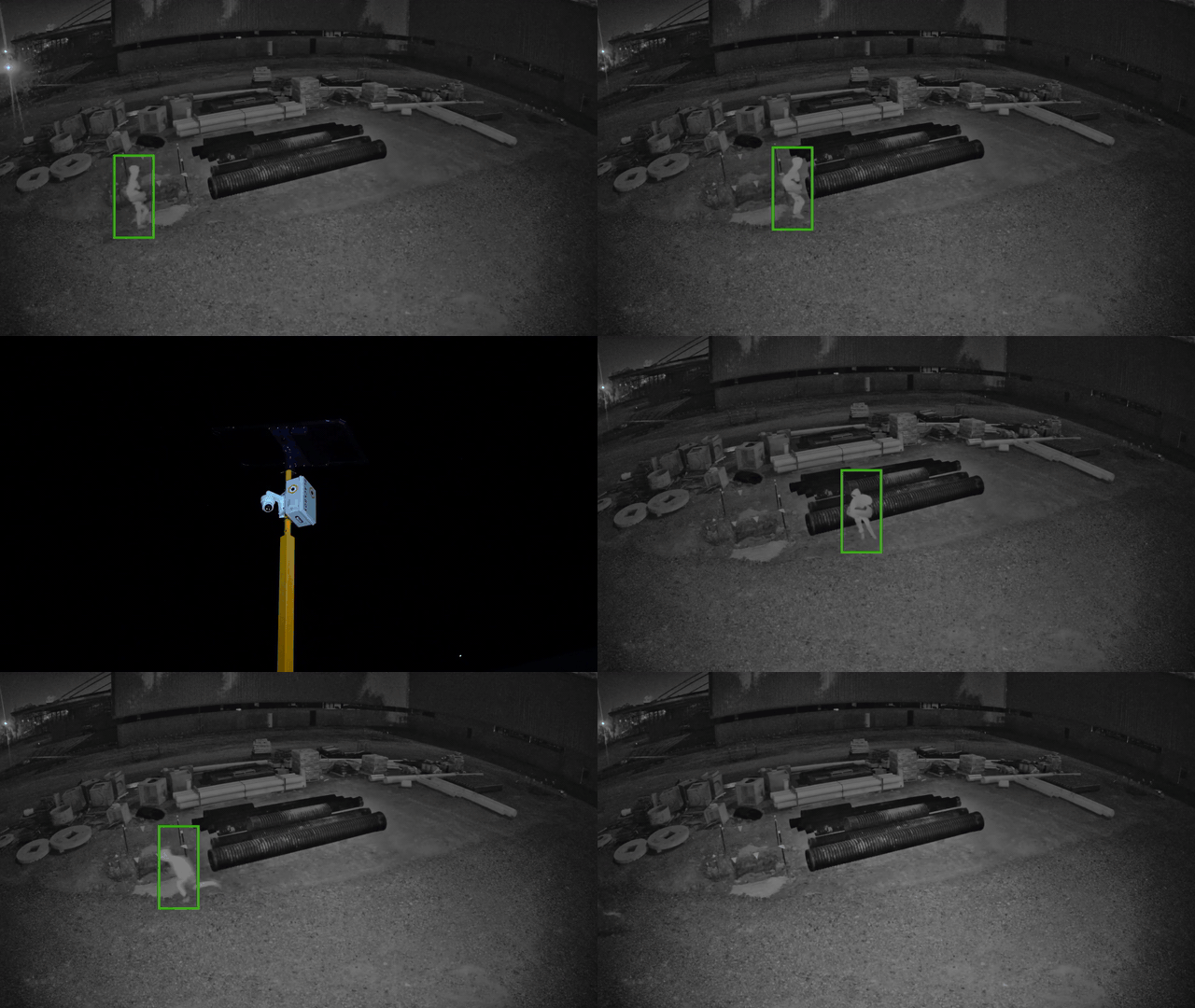
Basic motion detection can't tell the difference, so it floods teams with alerts and buries the ones that matter. AI analytics can distinguish people and vehicles from everything else. Blackbox's AI human detection cuts false alarms by up to 96%, depending on the system and site conditions.
In practice, that means:
- Alerts when a person or vehicle enters a monitored area, not when a branch moves
- Less time reviewing harmless footage
- Faster identification of suspicious behaviour
- More manageable monitoring across multiple sites
Deter before it escalates
Spotting an intruder is half the job. The other half is stopping them.
Blackbox pairs AI detection with active deterrents: high-intensity flashing strobes, audible alarms and instant mobile alerts. When someone is detected, the system warns them on the spot, often before they reach equipment or a restricted area. Instead of only recording intruders, you're actively deterring them.
3. Built for Harsh, Off-Grid Australian Conditions
A camera is no use if it stops working when the power does. Mine sites rarely have convenient mains power, sheltered mounting points or easy maintenance access.
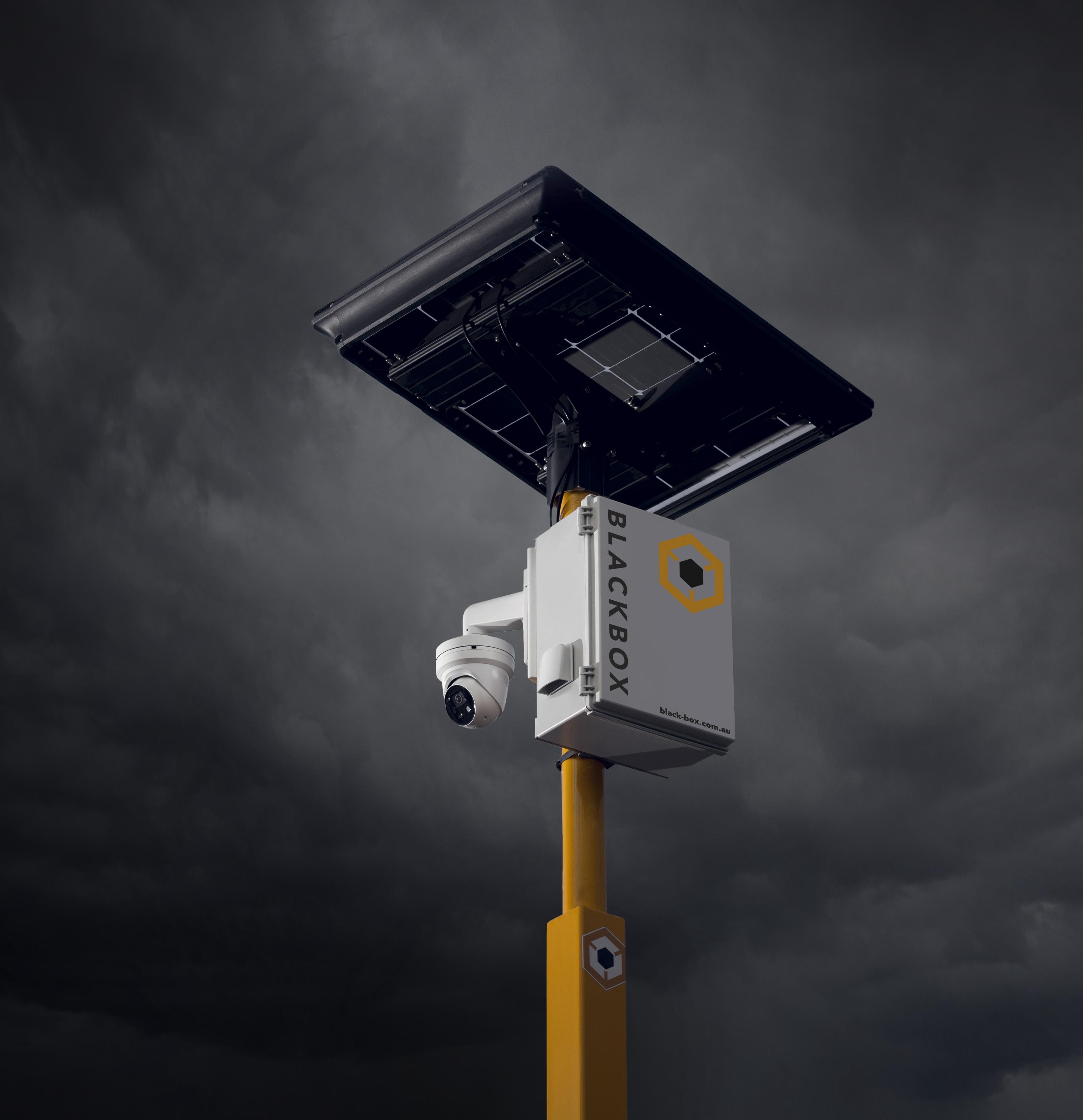
That's why power, durability and deployment speed belong high on your checklist. Blackbox's solar-powered security systems are designed for these conditions:
- Solar off-grid power: Coverage where there's no mains electricity.
- Battery backup: Up to three days of backup on solar systems, so cameras keep running through cloudy stretches.
- Rugged build: Engineered for extreme heat, dust, heavy rain and high-impact conditions, with cyclone-proof build quality.
- Rapid deployment: A 1.2-tonne concrete base and 5.5-metre tilt pole that can be deployed in minutes with our custom forklift trailer.
- Relocatable: Units move with the project as pits, haul roads and laydown areas shift.
That last point matters on mine sites, where the risk areas change as the operation develops. A fixed setup gets less useful over time. Relocatable units can be moved to wherever the new risk is.
Connectivity is the other piece. Many mine sites sit in cellular black spots, so our team designs and delivers custom point-to-point network infrastructure to keep cameras connected and alerts flowing from even the most isolated locations.
4. 24/7 Monitoring: Threats Don't Keep Business Hours
A camera that only records has a basic flaw: by the time someone watches the footage, the damage is done. On a remote site, an incident can go unnoticed for hours.
That's why 24/7 back-to-base monitoring is one of the most valuable parts of a remote security system. Blackbox combines AI detection with round-the-clock monitoring, live verification and response coordination, Australia-wide.
When an alert triggers, trained operators check it against live camera feeds. If it's genuine, they follow the escalation plan agreed with you at onboarding. That usually means contacting your nominated site representatives first, then police if needed, and a guard response if the situation calls for one.
The goal is to shorten the gap between detection, verification and action. Verified alerts also mean fewer wasted callouts for harmless activity.
In practice: a spot fire on a remote solar farm
When a spot fire started on a remote solar farm in regional Victoria, the site had limited personnel and patchy cellular coverage. Blackbox's back-to-base monitoring detected it within 45 seconds. The monitoring centre alerted the fire brigade and notified the client straight away, and the fast response prevented significant damage to plant and equipment.
Read more in our guide to back-to-base monitoring.
5. Remote Access: Know What's Happening Without Being There
One of the hardest parts of running a remote operation is simply knowing what's happening when you're not there. Project managers may be hundreds of kilometres away, and security leads may oversee several sites.
As Blackbox Director of Technology Ashley Roach puts it: "Our goal is helping clients monitor their projects, strengthen stakeholder engagement, and access real-time insights that support faster, more informed decisions."
Blackbox gives authorised users three ways in.
The Blackbox Site Intelligence app
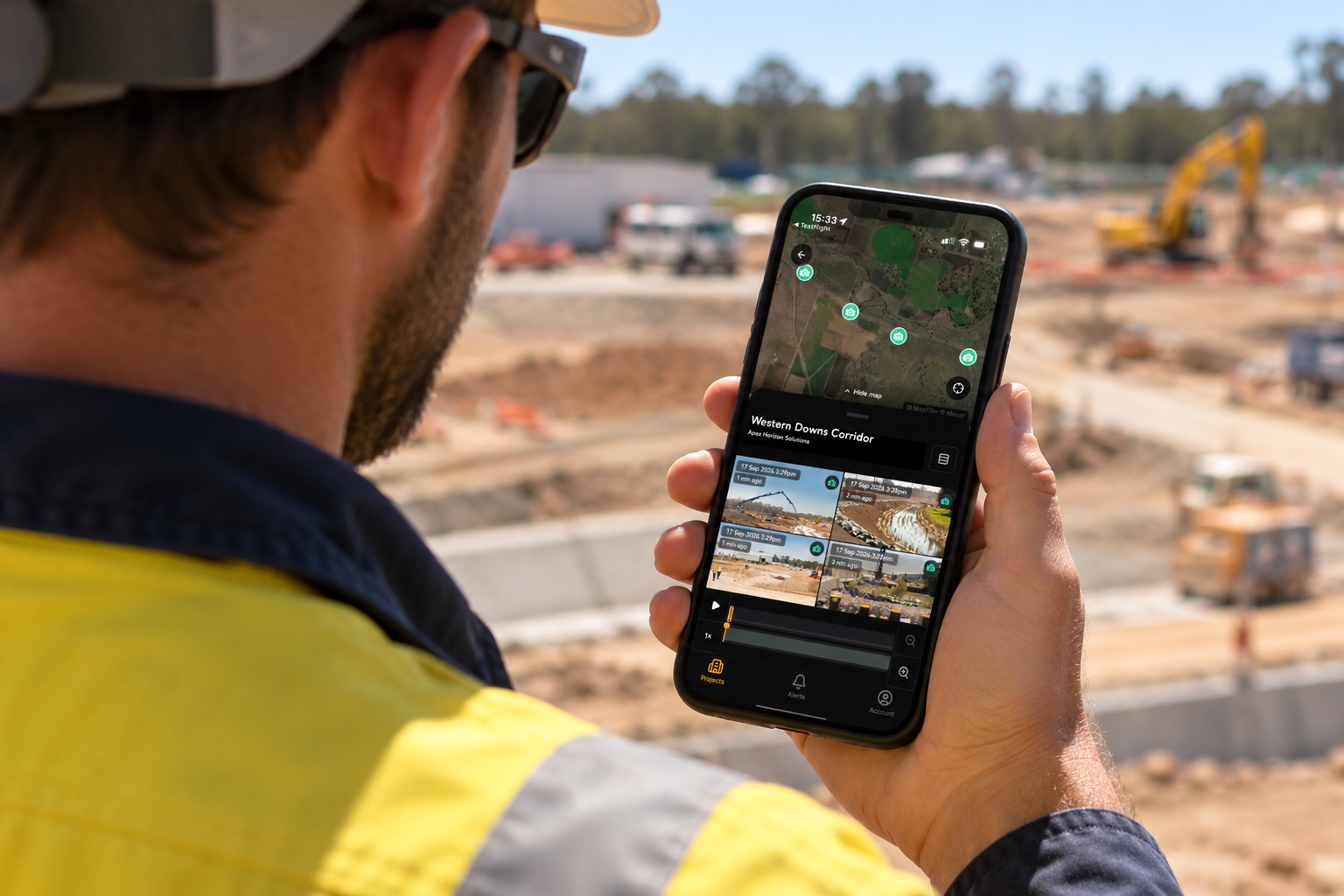
Our free mobile app for iPhone and Android puts every Blackbox camera in your pocket, built for people walking the site rather than sitting at a desk:
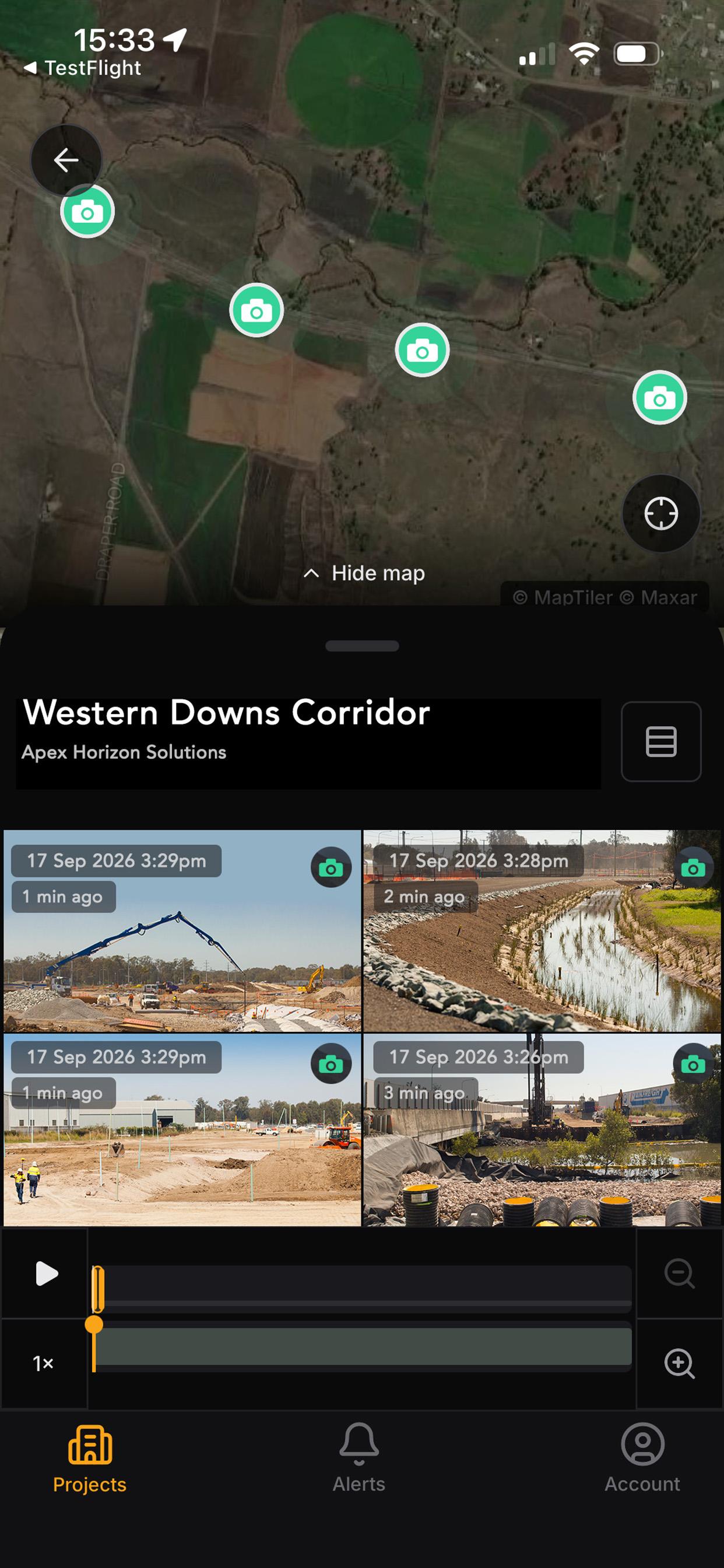
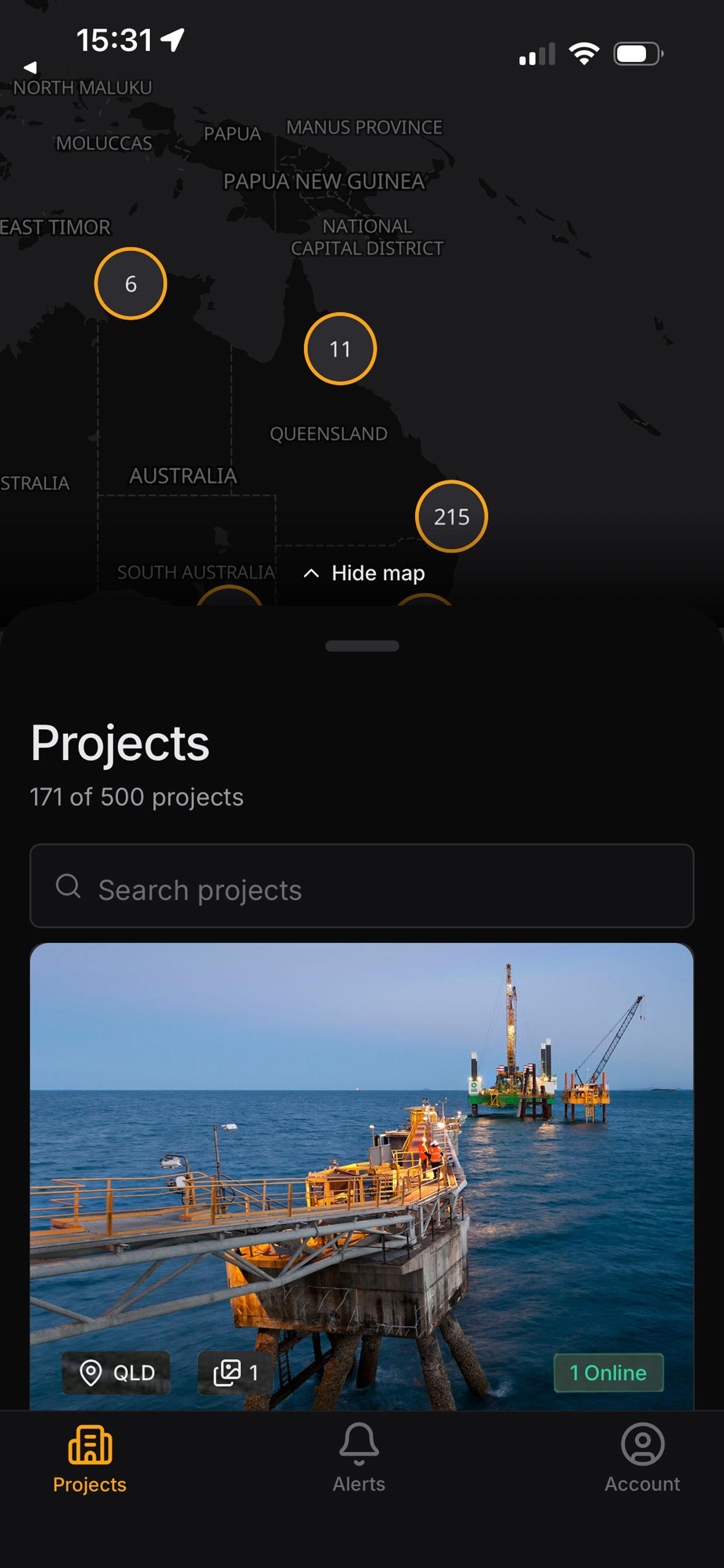
- Every project on a map: Each camera is pinned where it sits on site, showing the direction it faces.
- Camera wall: The latest image from every camera, its status and when it last updated. Watch live in SD or HD where streaming is enabled.
- One timeline: Drag the timeline and every camera on the project moves to the same moment.
- Alerts in one place: Notifications from all your projects, grouped by date.
- Shareable evidence: Mark up a frame with arrows, boxes and text, then save or share it from your phone.
- Built for site conditions: Large touch targets, one-handed use and a dark interface that stays readable in bright sun.
Existing clients sign in with their Blackbox account and their projects are ready. Learn more about Blackbox Site Intelligence.
The Blackbox Dashboard
For desktop oversight, the Blackbox Dashboard brings live streaming and visual records together:
- Live streaming: Check camera feeds in real time.
- Project timeline: Jump to any day or time to review activity.
- Time and date stamps: Useful for incident reporting and dispute resolution.
- Markup, albums and sharing: Annotate images, organise them by incident or milestone, and send them to the right people in seconds.
NX Witness video management
For dedicated security operations, Blackbox systems run on the NX Witness video management platform, with region search and AI-powered people and vehicle filtering to find incidents fast.
Together, these tools mean less time chasing updates and more time making decisions. The same records also support progress tracking, incident documentation and stakeholder reporting.
6. Integrated Security: More Than Cameras on a Pole
The most important question is how these features work together.
A sharp camera is wasted if nobody sees the alert until morning. AI can flag suspicious movement, but without reliable power or a connection the alert never arrives. Even the best detection is only as good as the response behind it.
Blackbox brings cameras, AI detection, solar power, active deterrents, remote access and 24/7 monitoring into one system, matched to each site's risks. On a mine site, that could mean:
- Dual 4K AI cameras covering equipment yards, fuel storage and laydown areas
- Overwatch PTZ cameras for oversight across pits and haul roads
- Licence plate cameras logging every vehicle at site entry points
- Solar-powered units with point-to-point connectivity for areas without power or coverage
- Strobes and alarms to deter intruders on the spot
- 24/7 monitoring to verify and escalate after hours
The numbers so far: more than 300 active sites protected, 99% system uptime, over 6,000 incidents detected and more than 1,200 break-ins averted.
No single setup suits every site. An isolated mine has different risks from a roadworks compound or a regional solar farm. The right design starts with what you're protecting, where the risks sit, and how the system needs to run.
Not sure where to start? Our guide to choosing the best camera for your site is a good first step.
Remote Site Security That Works Where You Need It
When you're responsible for valuable plant, remote operations and sites that are often empty, security has to do more than watch.
It needs the detail to identify a threat, the intelligence to catch it early, the toughness to survive the conditions, and the monitoring behind it to act when something's wrong.
For more than 15 years, Blackbox has worked with Australia's construction, mining, civil and government organisations. We design, install and maintain security systems around each site's risks, combining 4K AI cameras, solar off-grid power, active deterrents, mobile and desktop access, and 24/7 Australia-wide monitoring.
Need a better way to secure your remote site? Explore Blackbox site security or get in touch · 1300 301 384